

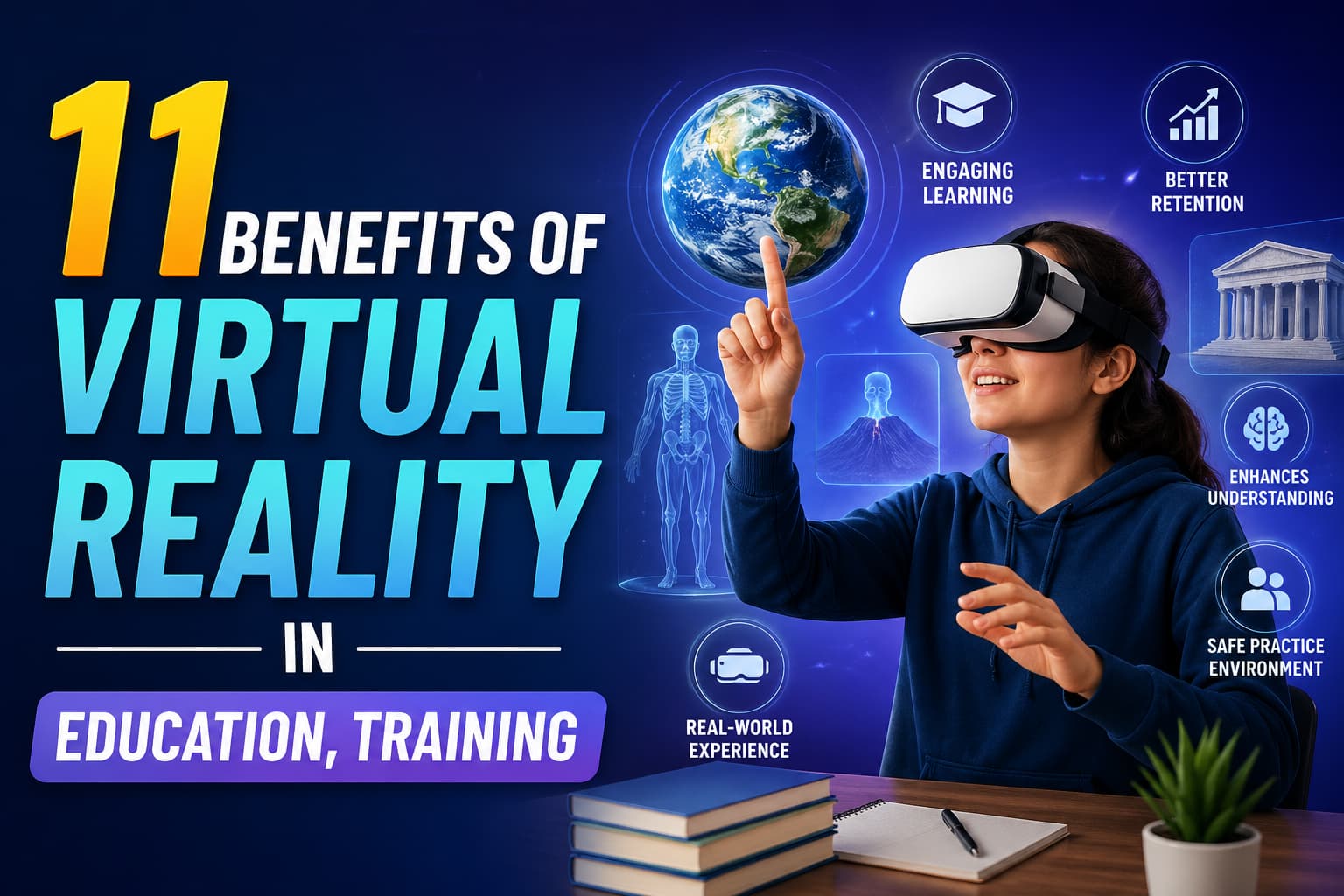
Virtual Reality is transforming how people learn, train, and perform across industries. From classrooms to factory floors, this immersive technology is enabling safer, faster, and more effective skill development. Whether it’s technical training, safety simulations, or advanced industrial learning, Virtual Reality is becoming a core part of modern education and workforce development.
Below are the top 11 benefits of Virtual Reality, along with real-world examples across welding, fire safety, automotive, and more.
Top 11 Benefits of Virtual Reality in Education, Training & Industry
1. Immersive Learning Experience
Virtual Reality creates a fully interactive environment where learners can engage deeply with the subject. Instead of passive learning, users experience real-life scenarios.
Example: In Virtual Reality welding simulators, trainees feel like they are performing real welding tasks, improving engagement and focus.
2. Safe and Risk-Free Training
One of the biggest advantages is the ability to train in hazardous environments without actual danger.
Example: Virtual Reality fire extinguisher training allows users to handle emergency fire situations safely without exposure to real flames.
3. Faster Skill Development
Hands-on practice in a virtual environment accelerates learning compared to traditional methods.
Example: Trainees using Virtual Reality spray painting simulators quickly master techniques like coating and movement without wasting materials.
4. Cost-Effective Training Solutions
Virtual Reality eliminates the need for raw materials, equipment wear-and-tear, and repeated setups.
Example: Welding and machining training through Virtual Reality reduces the cost of metals, tools, and operational errors.
5. Real-Time Feedback and Performance Tracking
Virtual Reality systems provide instant feedback on performance, helping learners improve continuously.
Example: In Virtual Reality machinist and fitter training, users receive data on precision, accuracy, and technique.
6. Standardized Training Across Locations
Virtual Reality ensures consistent training quality regardless of location.
Example: Companies can deploy Virtual Reality automotive repair or electrical training modules across multiple factories with the same standards.
7. Eco-Friendly and Sustainable Learning
Virtual training reduces material waste and environmental impact.
Example: Virtual Reality welding and spray painting simulations eliminate the need for physical materials, making training more sustainable.
8. Hands-On Practice Without Physical Setup
Learners can gain practical experience without needing heavy machinery or infrastructure.
Example: Virtual Reality aviation and aircraft training allows users to understand complex systems without access to real aircraft.
9. Enhanced Safety Awareness
Virtual Reality helps users experience emergency and critical scenarios, improving preparedness.
Example: Military and industrial safety simulations expose users to high-risk situations, improving decision-making and response time.
10. Improved Engagement and Retention
Interactive learning environments increase motivation and knowledge retention compared to traditional classroom methods.
Example: Students learning electrical systems through Virtual Reality are more likely to remember concepts due to visual and interactive experiences.
11. Industry 4.0 Ready Training
Virtual Reality aligns with modern industrial needs, integrating digital tools, analytics, and smart learning systems.
Example: Training programs in welding, fitter, automotive, electrical, and mechanical fields prepare workers for Industry 4.0 environments.
Conclusion
Virtual Reality is revolutionizing education and training by making learning more immersive, safe, and efficient. From welding and fire safety to automotive, electrical, and aviation training, its applications are vast and continuously expanding. This technology is helping organizations improve productivity, reduce risks, and build a highly skilled workforce.
As industries move toward digital transformation, Virtual Reality will play a crucial role in shaping the future of skill development, making it an essential investment for organizations and educational institutions alike.
Frequently Asked Questions (FAQs)
1. What are the main benefits of Virtual Reality in education?
Virtual Reality improves engagement, enhances understanding, provides hands-on experience, and increases knowledge retention.
2. How does Virtual Reality help in industrial training?
It enables safe, cost-effective, and realistic simulations for high-risk tasks like welding, electrical work, and machinery operations.
3. Is Virtual Reality suitable for all industries?
Yes, Virtual Reality can be adapted for industries like manufacturing, healthcare, aviation, military, and education.
4. Does Virtual Reality reduce training costs?
Yes, it reduces expenses related to materials, equipment, errors, and safety risks.
5. What is the future of Virtual Reality in training?
The future includes AI integration, advanced simulations, and widespread adoption across industries for smarter and scalable training solutions.